An invitation to a cinematic underworld
Now Showing
On Saturday the 17th of October, from 6pm to 8pm, artist Olivia du Vergier and I have been invited to the Depot Cinema in Lewes, East Sussex, to participate in an in-conversation session. Together we'll be presenting a selection of our film and video works, whilst discussing the submerged subterranean processes that shaped them.
This occasion has been organised by the Devonshire Collective's Volta Artists' Moving Image group and is, happily, free of charge and open to all. Anyone wishing to come along to this one-off event, please drop Sam at the Devonshire Collective a line at:
sam@devonshirecollective.co.uk
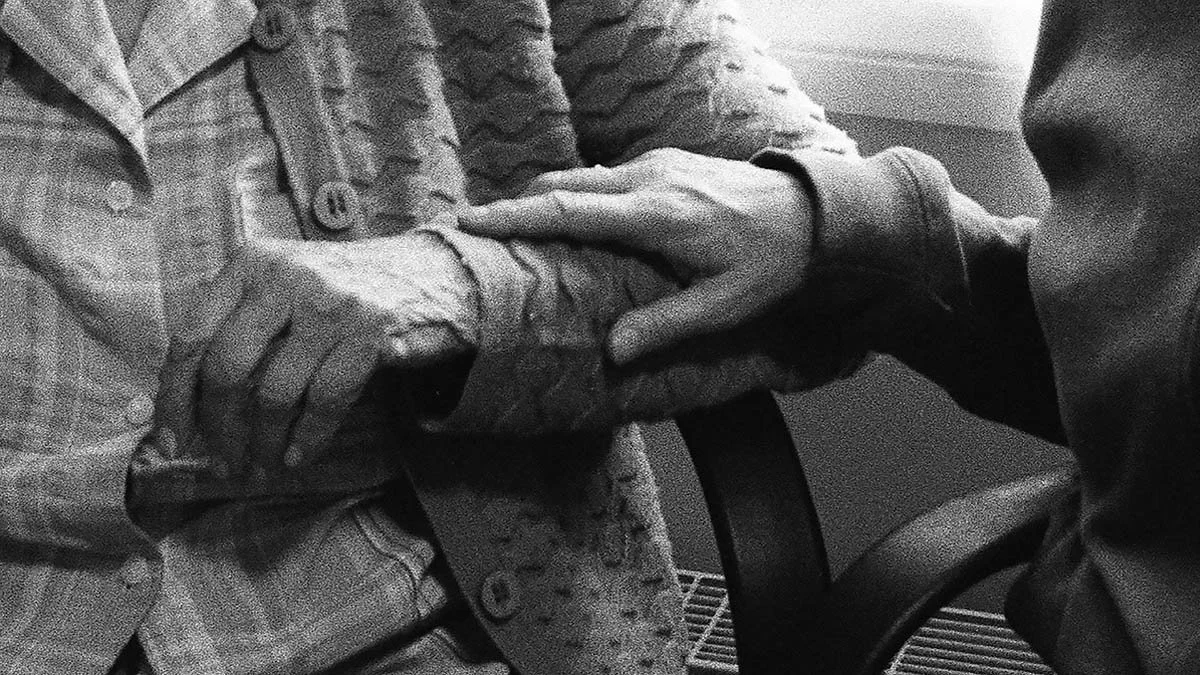
Skin (here), Olivia du Vergier, 2018
Time & Space
Recently, I've found myself being drawn to the rotations of the International Space Station, a live feed from which is accessible continuously online. Watching this endless stream, I've seen astonishing glimpses of the technological sublime unfurl, the images overlaid by the voices of the station's off-world inhabitants, beaming technical queries back to their support teams on Earth. For an elevated perspective on our shared home planet, tune in here.
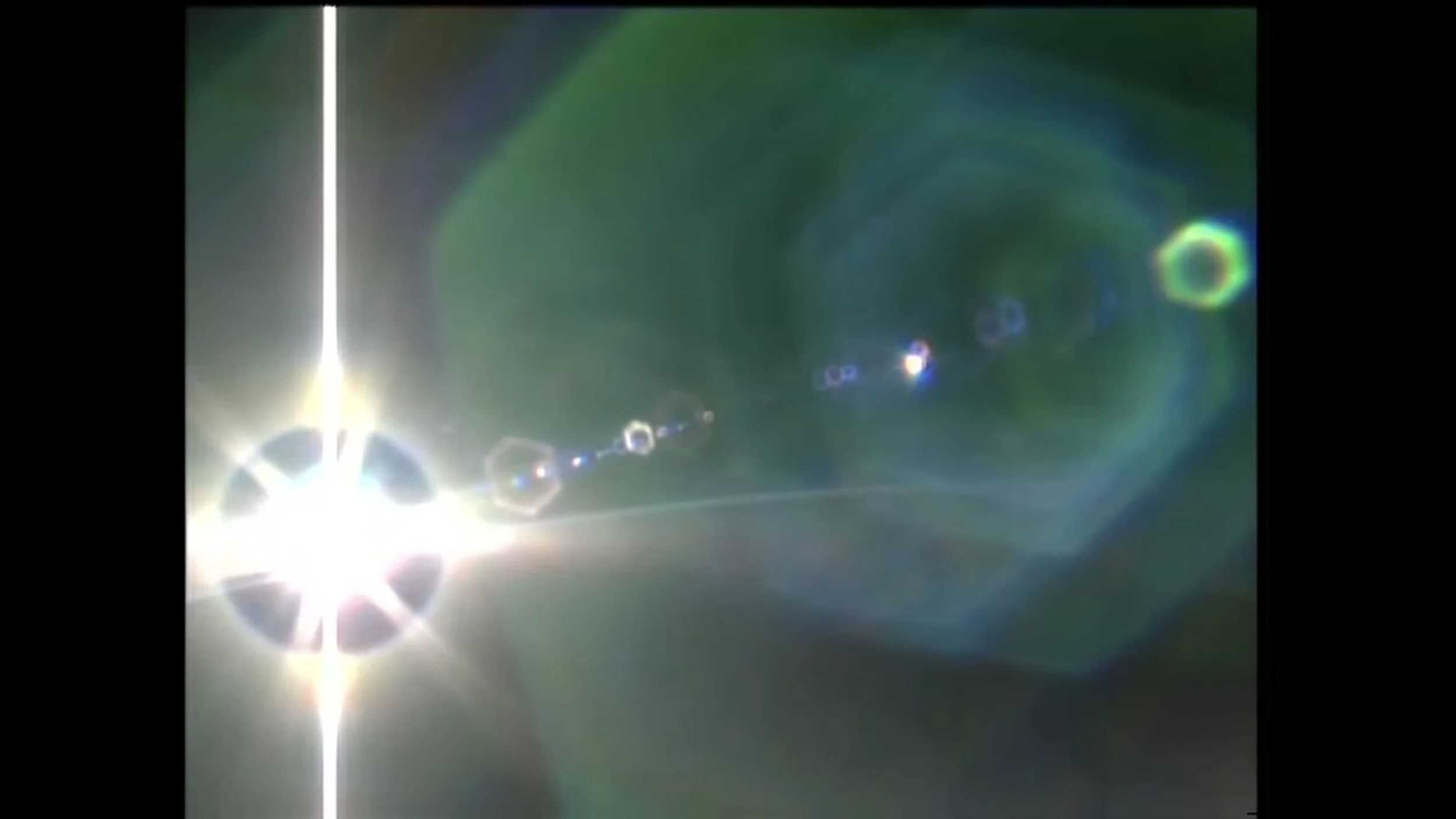
Live Video from the International Space Station (Official Nasa Stream), screenshot taken on 10/09/26
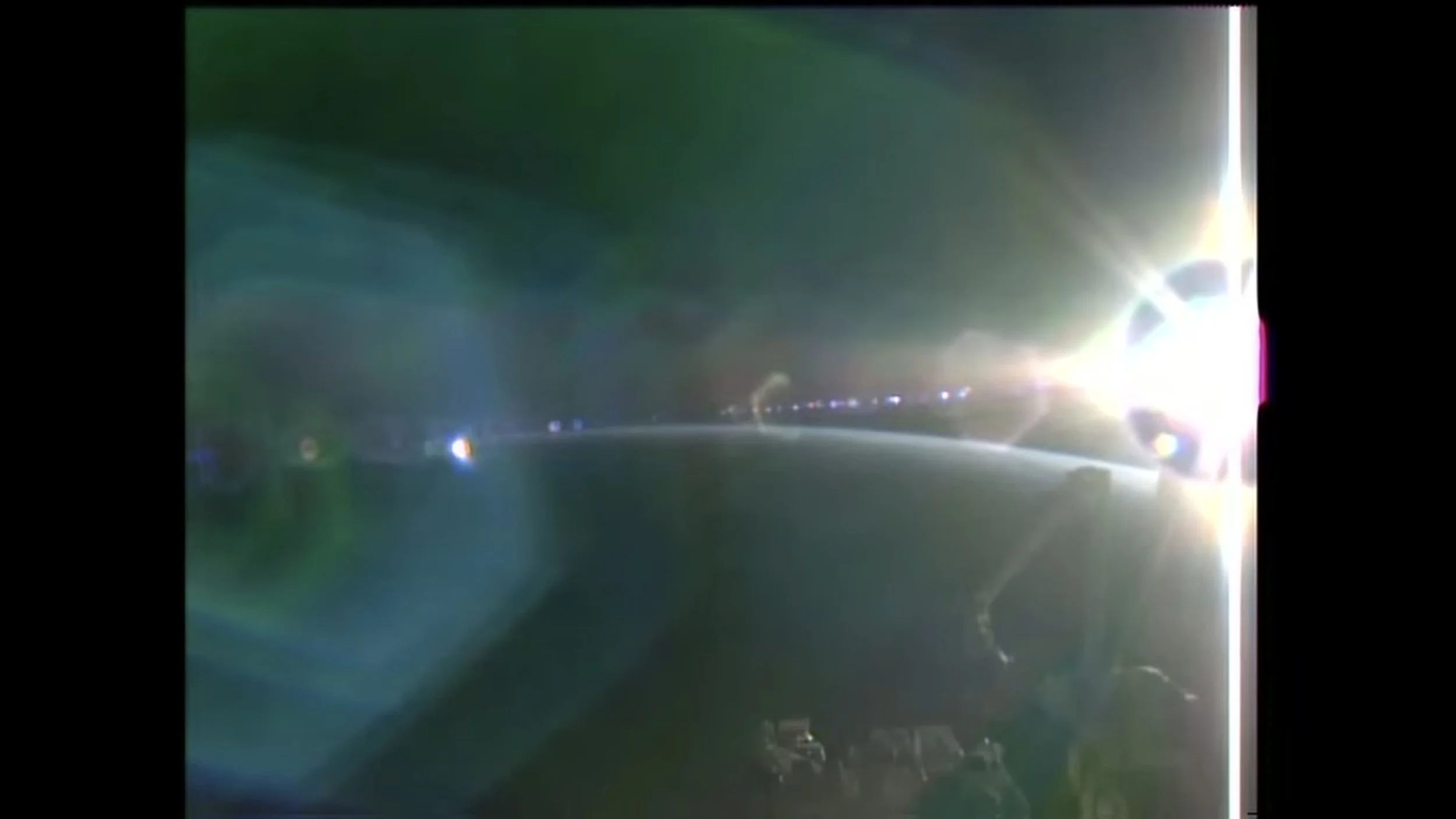
Live Video from the International Space Station (Official Nasa Stream), screenshot taken on 29/09/26
For me, there is something appealing about this relentless ISS feed, and the seemingly endless gaze of the patient observing machine that relays it. On reflection, I think that these sorts of feeds, with their limitless timespans, coupled with the somewhat impersonal gaze of their fixed perspectives, may have informed some of my more recent films, such as The Nursery of Worlds. Here the camera seemingly tracks, without deviation, over an amorphous terrain, perhaps suggestive of some primordial swamp, or else depicts the microcosmic teeming of alien life seen on a biological sample. More recently, my new film The Wake of the Gods was, in part, inspired by live images of weather systems slowly undulating across the Earth's rotating surface, which I'd seen some years previously and, no doubt, filed away subconsciously. To me, these recent films seem to fuse the detached gaze of the impassive machine with imagery of an expressively Romantic nature, imagery suggestive, perhaps, of the sunken interior depths of subjective dream-life.
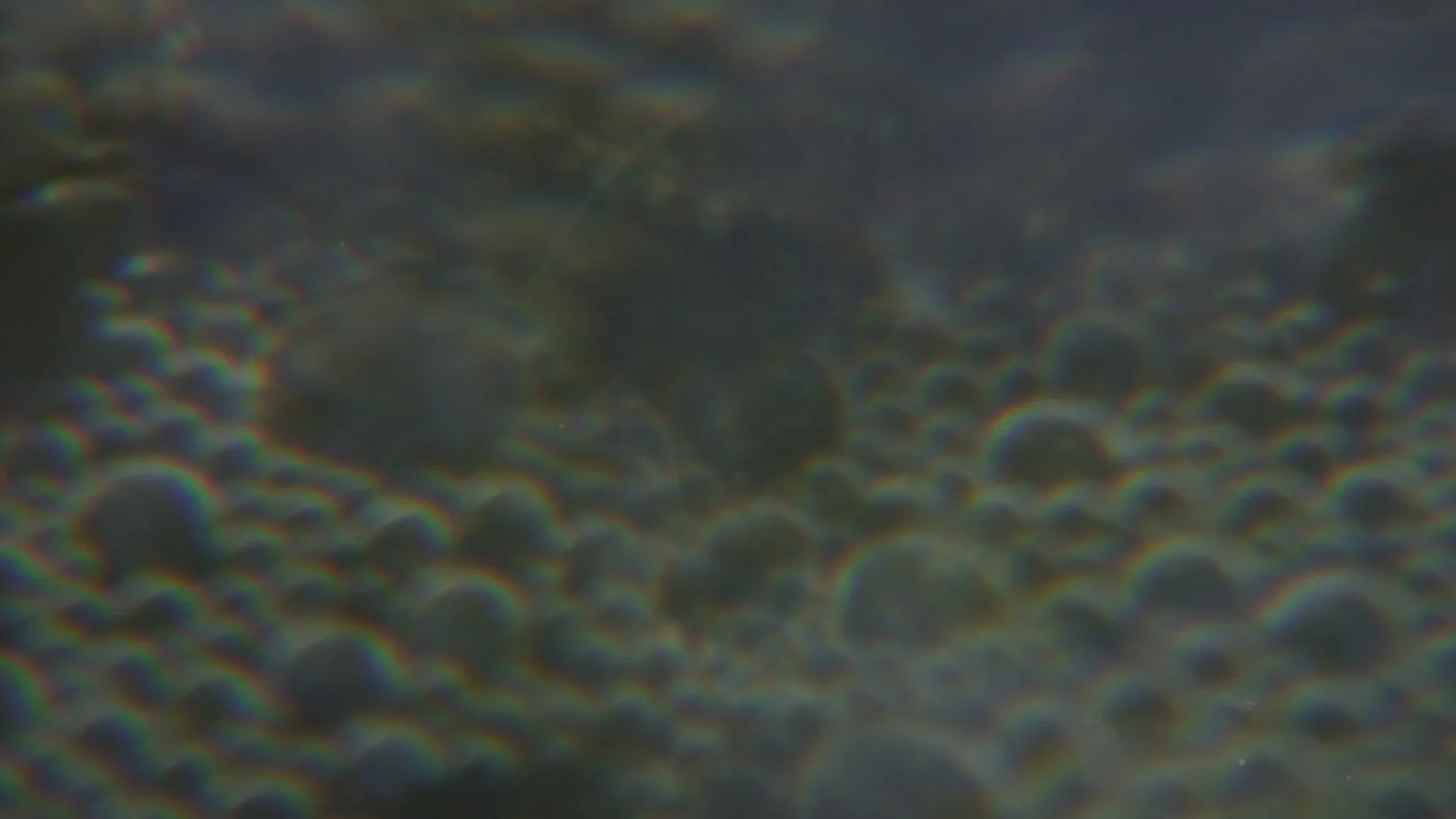
The Nursery of Worlds, film still, 2022
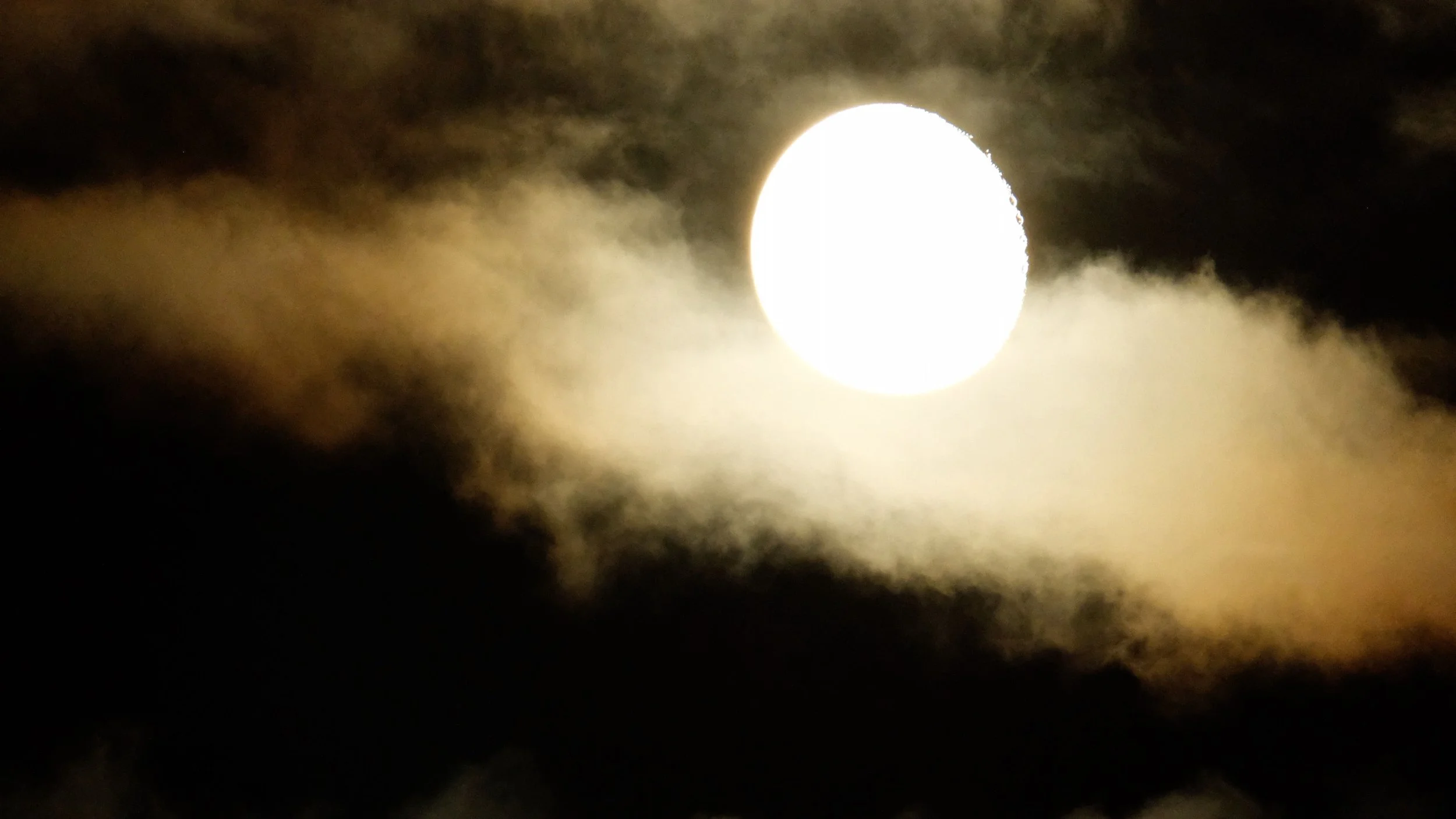
The Wake of the Gods, film still, 2026
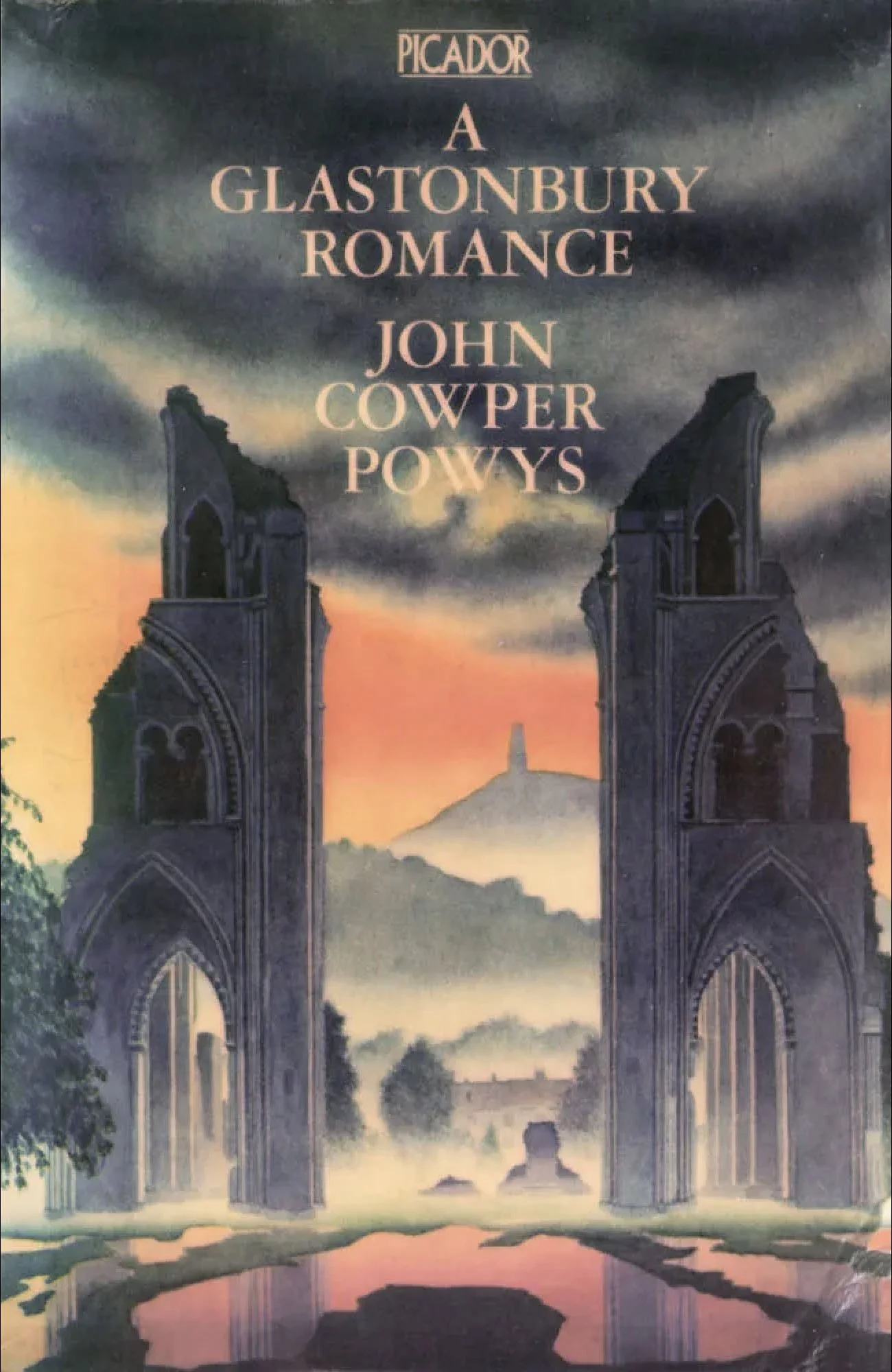
The 1975 Picador edition of A Glastonbury Romance. Cover painting by Mark Harrison. Image borrowed from this blog
Mystic Monolith
On the subject of expansive durations, I've been thinking about large books recently, and the pleasures gained from reading them. The fact that potential readers may recoil from dense tomes, as if backing away from monsters, gives these volumes, to me, paradoxical appeal. The perceived impenetrability is part of the draw. The appeal is similar to that of certain films, like Jacques Rivette's 13-hr mountain Out 1 (1971), a film which I've had access to for years now, but never actually watched. Unseen, the film radiates a potent charge, like the draw of a cinematic grail. Similarly, I had John Cowper Powys's monolithic book A Glastonbury Romance (1932) on the shelf for over a decade and, perhaps due to its 1,120 page length - making it, perhaps, the longest novel in English - I'd never attempted it before now. Reading it today, I find myself deep inside an Arthurian labyrinth, a visitor to an enchanted, myth-soaked Glastonbury, finding myself living alongside the innumerable characters that drift through its pages, whose lives unfold under the enduring spell of the holy grail. Fantastically, the novel's personages include several that are rarely given voice in fiction. The immemorial stones, trees, pungent mosses, purple twilights, spring flowers and saturated meadows, even the sun and the moon, all possess vital animistic agency here. Likewise, the novel's generous range draws in the supernatural. In one scene intermingling thought-forms appear, mistily congregating over the heads of a group of unsuspecting partygoers. Elsewhere, the novel transfers us into the paradoxical consciousness of a dead man, shreds of whose presence still hauntingly linger in his recently vacated skull, before spookily coalescing elsewhere. More mysterious still is the vague, undefined presence of the Outside itself, a sense of something Beyond, which, at moments, seems to weirdly press up against the borders of perceived reality, as if blowing in from an adjacent dimension. Reading this book, at certain moments, is like floating along a river of mystic beauty. The book's transcendent passages, often describing the fusion of people and nature - the intermingling and interpenetrating of moods - summon imagery suggestive of the painted reveries of the nature-worshipping Romantics.
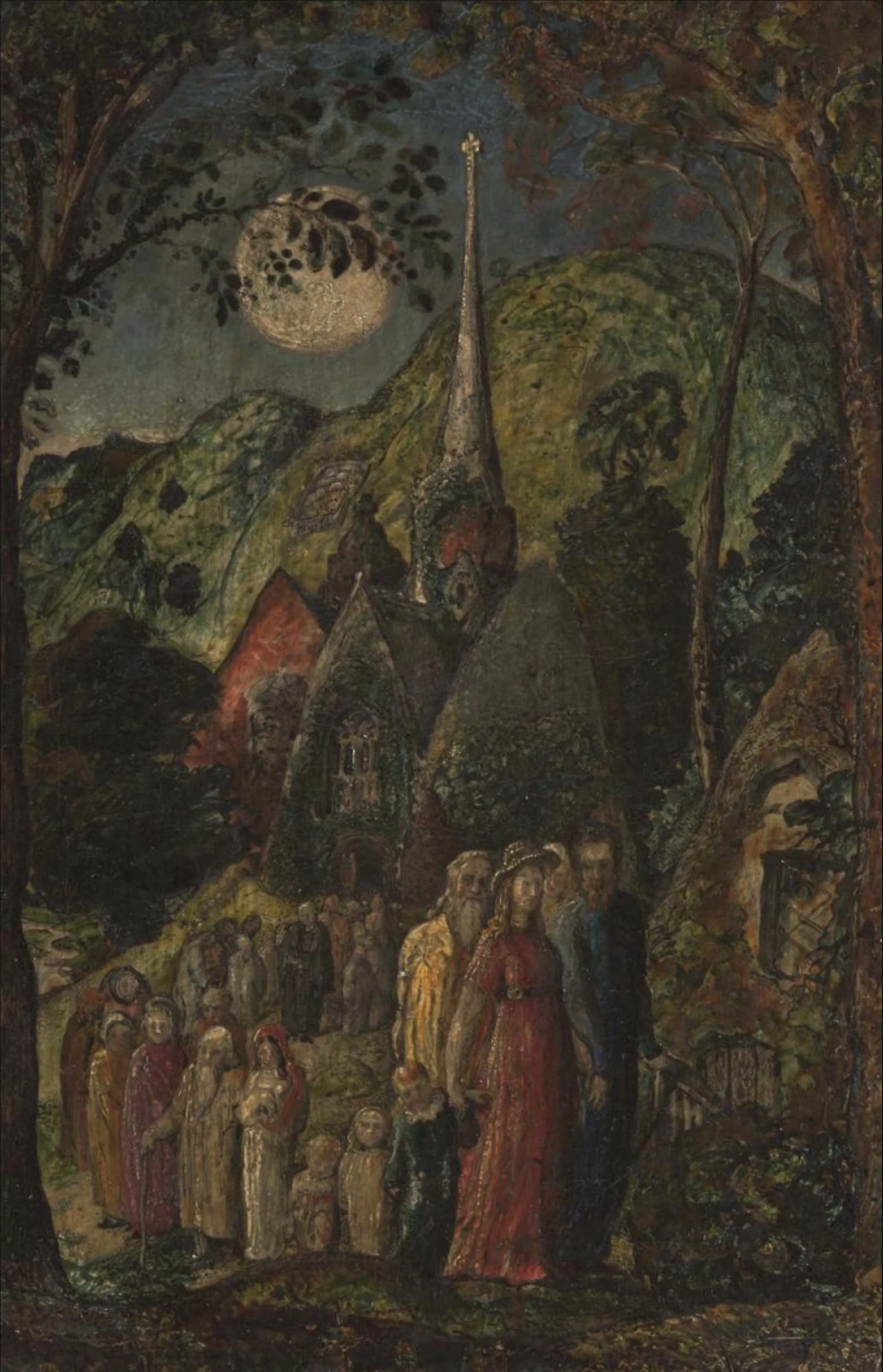
Coming from Evening Church, Samuel Palmer, 1830. Image borrowed from the Tate's website